
This simple yet sincere setup resonated strongly with players. Within just two weeks of release, the game sold over 100,000 copies. On Steam, it received more than 7,000 reviews, with a peak positive rating of 99%.

Beyond the “Pomodoro Timer”: Turning Productivity Tools into a Companionship Experience
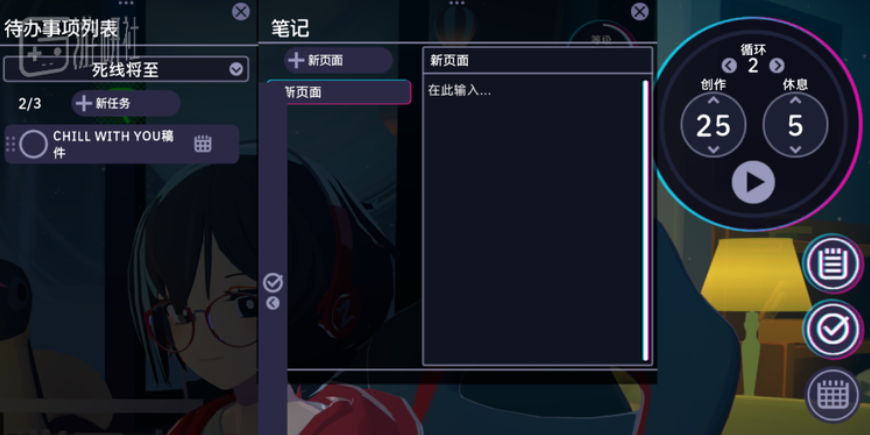
Most productivity applications revolve around the “Pomodoro Technique,” using timed intervals to balance focus and rest. Many similar games build on this by offering gameplay mechanics such as earning in-game currency during focus periods to purchase virtual furniture or decorations.Chill with You: Lo?Fi Story, however, takes a different approach: it transforms focused work into interactive moments with Satone. Many players keep the game on a secondary screen, glancing at it during study breaks to feel as if she is genuinely sitting beside them. This mirrors the modern “study buddy” culture — having someone nearby makes it easier to get into the flow.
As players accumulate focus time, they also increase Satone’s affection, unlocking further dialogues in which she shares her daily life, interests, or small academic frustrations. Beyond narrative incentives, the game cultivates a unique sense of ritual: greetings when launching the game, encouragement before starting work, gratitude afterward… these subtle interactions create a quiet companionship, evoking memories of shared campus moments.
A Small Team with a Clear Vision: Balancing Efficiency and Emotion
Although the development team behind Chill with You: Lo?Fi Story (Nestopi Inc.) is small, their creative direction is clear: they aim to recreate the atmosphere of quietly working alongside friends and to alleviate the loneliness many young people feel under competitive pressure.Satone is designed as a realistic peer, complete with dreams, doubts, and the pressures of academic and future choices. This relatability resonates with players. The game does not rely on dramatic conflict; instead, it focuses on creating a calm and reassuring sense of presence.
This approach also presented a key challenge during development: how to balance “tool” and “game,” “companionship” and “intrusion.” The team intentionally avoided flashy designs or complex interactions that might distract from focus. Even the character’s voice lines were recorded in a natural, conversational tone, maintaining a comfortable distance that never feels intrusive.
The End and Continuation of Companionship
As a narrative-driven “work?focused sound novel,” Chill with You: Lo?Fi Story has finite story content. Some players, reluctant to end their time with Satone, have created AI dialogue mods to extend the interaction. The development team understands this desire but emphasizes that the true value lies in the authentic moments spent focusing and motivating each other alongside Satone.This design also raises a thoughtful question: how can a virtual relationship leave a real emotional imprint? The answer lies in attention to detail and authentic emotional expression.

Conclusion: A Good Story Needs to Be Truly “Understood”
The success of Chill with You: Lo?Fi Story highlights the power of emotional connection — even in a virtual medium, sincerity can bridge the screen and resonate deeply.Ensuring this resonance crosses language and cultural boundaries requires professional localization. This goes beyond literal translation to include tone, cultural references, and subtle emotional cues, allowing characters to maintain authenticity and impact across markets.
This is precisely Glodom’s focus. We are dedicated to helping every creative project — whether a game, app, or other digital product — preserve its emotional warmth and narrative charm when entering new markets, ensuring that every good story can truly be “understood” worldwide.
This article is reprinted from YouYanShe and does not necessarily represent Glodom’s views. For corrections, please contact info@glodomtec.com.